
Complete List of Police Ten Codes and Scanner Codes

If you have ever listened to a police scanner or watched a crime drama, you have heard officers using numerical codes like "10-4" or "10-20." These are police ten codes, a shorthand radio language that law enforcement developed to communicate quickly and concisely over radio.
Here is the thing most websites get wrong about 10 codes: there is no universal list. Every department can and does modify these codes to fit their operations. The table below represents the most commonly used meanings, but your local department may use some of them differently.
The History of Police Ten Codes
Police ten codes were developed in 1937 by Charles "Charlie" Hopper, the communications director for the Illinois State Police. The original purpose was practical: early police radios had a warm-up delay, and the first syllable of a transmission was often cut off. Starting every message with "10" gave the radio time to stabilize before the meaningful part of the code was transmitted.
The Association of Public-Safety Communications Officials (APCO) adopted and expanded the codes in 1940, creating what became known as APCO Project 1. Over the decades, individual departments modified and added codes to suit their specific needs. By the time the system was fully mature, hundreds of variations existed across the country.
The 10 Codes Everyone Should Know
These codes are used so widely that they have essentially become universal:
| Code | Meaning | Usage |
|---|---|---|
| 10-4 | Message received, acknowledged | The most recognized code. Used to confirm understanding. |
| 10-9 | Repeat last message | Used when transmission was unclear or missed. |
| 10-20 | Location / "What is your 20" | Asking for or reporting current location. |
| 10-33 | Emergency traffic | All other radio traffic stops. Priority emergency. |
| 10-7 | Out of service | Officer is unavailable (break, end of shift, etc.). |
| 10-8 | In service | Officer is available and on duty. |
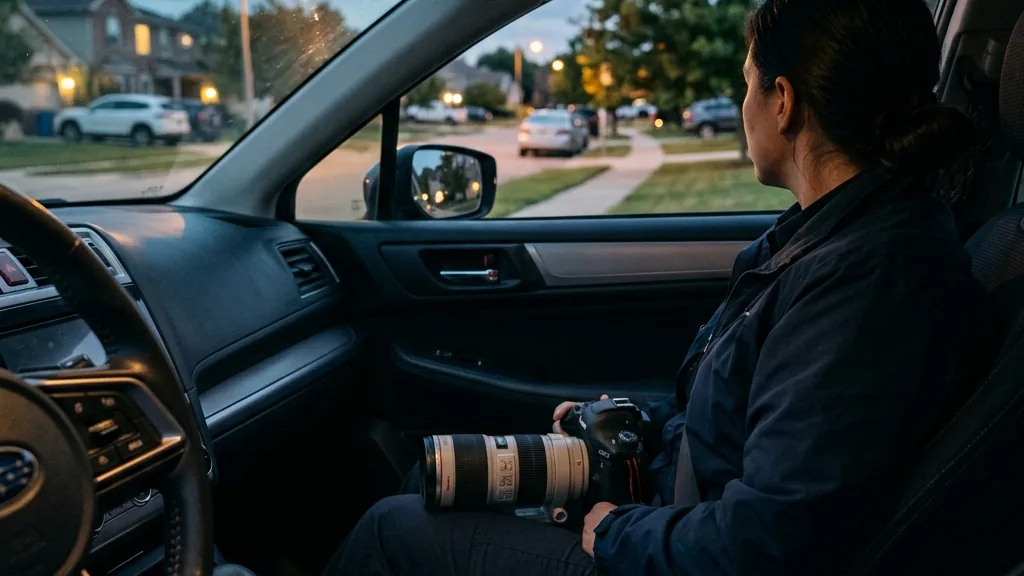
Full 10 Code Reference Table
Important: The meanings listed below represent the most common usage. Your local department may define some codes differently. When in doubt, check with your local agency or use a site like RadioReference.com for department-specific code lists.
| Code | Most Common Meaning |
|---|---|
| 10-1 | Signal weak / Unable to copy |
| 10-2 | Signal good / Loud and clear |
| 10-3 | Stop transmitting |
| 10-4 | Message received / Acknowledged |
| 10-5 | Relay message |
| 10-6 | Busy / Stand by |
| 10-7 | Out of service |
| 10-8 | In service / Available |
| 10-9 | Repeat last message |
| 10-10 | Fight in progress / Off duty |
| 10-11 | Dog case / Animal complaint |
| 10-12 | Visitors present / Stand by |
| 10-13 | Weather and road conditions / Officer needs help (varies) |
| 10-14 | Suspicious person / Prowler report |
| 10-15 | Prisoner in custody |
| 10-16 | Domestic disturbance |
| 10-17 | Meet complainant |
| 10-18 | Complete assignment quickly |
| 10-19 | Return to station |
| 10-20 | Location |
| 10-21 | Call by telephone |
| 10-22 | Disregard last message |
| 10-23 | Arrived at scene |
| 10-24 | Assignment completed |
| 10-25 | Report in person / Meet |
| 10-26 | Detaining subject |
| 10-27 | Driver's license check |
| 10-28 | Vehicle registration check |
| 10-29 | Check for wanted / warrants |
| 10-30 | Unnecessary use of radio / Does not conform to regulations |
| 10-31 | Crime in progress |
| 10-32 | Person with gun |
| 10-33 | Emergency / All units stand by |
| 10-34 | Riot / Major disturbance |
| 10-35 | Major crime alert |
| 10-36 | Correct time |
| 10-37 | Suspicious vehicle |
| 10-38 | Stopping suspicious vehicle |
| 10-39 | Urgent / Use lights and siren |
| 10-40 | Silent run (no lights/siren) |
| 10-41 | Beginning tour of duty |
| 10-42 | End tour of duty |
| 10-43 | Information |
| 10-45 | Dead animal / Deceased person (varies) |
| 10-50 | Traffic accident |
| 10-51 | Tow truck needed |
| 10-52 | Ambulance needed |
| 10-53 | Road blocked |
| 10-54 | Hit and run accident |
| 10-55 | Intoxicated driver |
| 10-56 | Intoxicated pedestrian |
| 10-57 | Hit and run (felony) |
| 10-59 | Escort / Convoy |
| 10-60 | Squad in vicinity |
| 10-61 | Personnel in area |
| 10-62 | Reply to message |
| 10-63 | Prepare to copy |
| 10-64 | Message for local delivery |
| 10-65 | Net message assignment |
| 10-66 | Message cancellation |
| 10-67 | Clear for net message |
| 10-70 | Fire alarm |
| 10-71 | Advise nature of fire |
| 10-72 | Report progress on fire |
| 10-73 | Smoke report |
| 10-77 | ETA (estimated time of arrival) |
| 10-78 | Need assistance |
| 10-79 | Notify coroner |
| 10-80 | Chase in progress |
| 10-85 | Delay due to... |
| 10-91 | Pick up prisoner |
| 10-95 | Prisoner in custody |
| 10-97 | Check signal / Arrived at scene |
| 10-98 | Prison break / Last assignment complete |
| 10-99 | Wanted / stolen indicated (varies widely) |
NATO Phonetic Alphabet (Used with 10 Codes)
Officers use the NATO phonetic alphabet alongside 10 codes to spell out names, license plates, and other critical information over radio. Here is the standard alphabet used by most US law enforcement:
| Letter | Word | Letter | Word |
|---|---|---|---|
| A | Alpha | N | November |
| B | Bravo | O | Oscar |
| C | Charlie | P | Papa |
| D | Delta | Q | Quebec |
| E | Echo | R | Romeo |
| F | Foxtrot | S | Sierra |
| G | Golf | T | Tango |
| H | Hotel | U | Uniform |
| I | India | V | Victor |
| J | Juliet | W | Whiskey |
| K | Kilo | X | X-ray |
| L | Lima | Y | Yankee |
| M | Mike | Z | Zulu |
The Shift to Plain Language
After the communication breakdowns during Hurricane Katrina in 2005 and the September 11, 2001 attacks, the Department of Homeland Security and FEMA issued recommendations for all public safety agencies to switch from 10 codes to plain language communication. The reasoning was straightforward: when officers from different agencies work together during a major incident, conflicting code meanings create confusion that can cost lives.
Many large departments have made the switch. The California Highway Patrol, the New York City Police Department, and numerous federal agencies now use plain language for all radio communications. However, smaller departments and county agencies often continue using 10 codes for routine operations.
What Plain Language Sounds Like
Instead of "10-50, 10-52 needed, 10-20 is Main and 4th," an officer using plain language would say: "Traffic collision, need an ambulance, location is Main Street and 4th Avenue." The message is immediately clear to any listener, regardless of their home agency or training background.
That said, old habits take time to change. Even in departments that have officially transitioned, you will hear officers slip into code language during routine calls. The muscle memory from years of code use is strong, and many officers feel that codes provide a layer of privacy from the public when discussing sensitive situations.
Why Investigators Need to Know Scanner Codes
Private investigators do not use police radio frequencies, but understanding scanner codes and communication equipment is a practical skill for anyone working in the investigation field. Here is why it matters:
- Coordinating with law enforcement. When PIs work alongside police on cases involving missing persons or active surveillance, understanding radio traffic helps them stay informed about the operational situation around them.
- Monitoring active scenes. During field work, knowing what police activity is happening nearby keeps investigators safe and helps them avoid interfering with ongoing law enforcement operations.
- Background in law enforcement. Many PIs are former police officers who used these codes daily. The knowledge transfers directly into their investigation practice.
- Client education. Clients sometimes ask about codes they heard on scanners or in police reports. Being able to explain what those codes mean is part of providing thorough professional investigation services.
Common Misconceptions About Police Codes
Several myths about police codes circulate online. Here are the facts:
- "Code 187 means homicide everywhere." This is a California Penal Code section, not a radio code. It applies only in California. Other states use different penal code numbers for the same offense.
- "All departments use the same codes." False. As explained above, codes vary widely. Even neighboring departments in the same county may define codes differently.
- "Police codes are secret." Most departments do not treat their code lists as confidential. Many publish them publicly, and scanner listeners have documented them extensively. The codes were never designed for secrecy; they were designed for brevity.
- "10-codes are being completely eliminated." Not true. While federal agencies and large departments have moved to plain language, thousands of smaller departments still use codes daily. The transition is gradual and voluntary.
Finding Codes for Your Specific Area
If you need accurate codes for your local police department, do not rely on a generic national list. Instead:
- RadioReference.com: The most comprehensive database of scanner frequencies and codes organized by state, county, and department.
- Your department's website: Some departments publish their code lists online.
- Scanner apps: Broadcastify and Scanner Radio provide live feeds with community-maintained code guides.
- Local scanner enthusiast groups: Facebook groups and forums dedicated to your area often maintain accurate, current code lists.
For more on how law enforcement and investigation professionals work together, read about PI support for legal cases or learn about OSINT tools used in modern investigations.
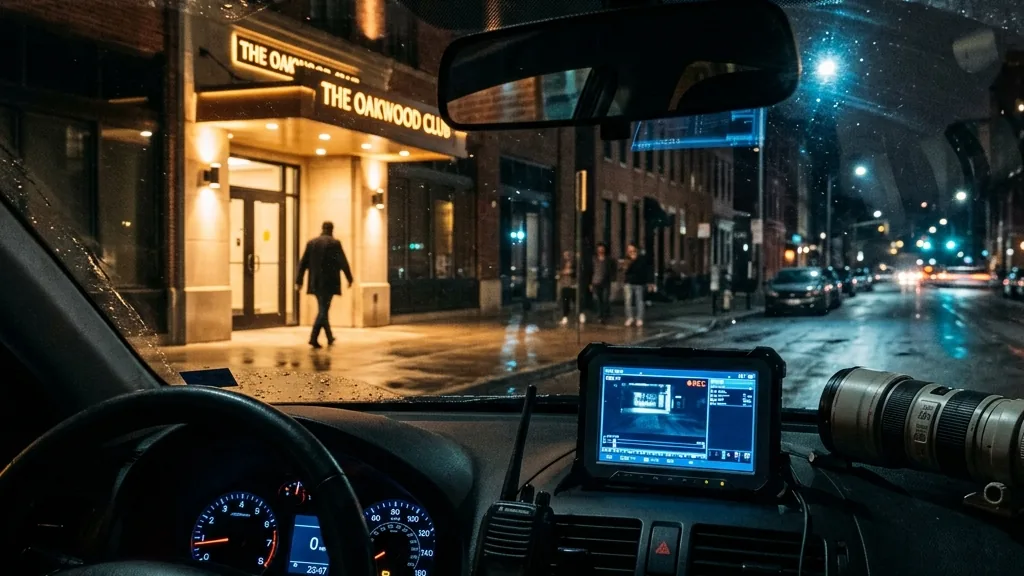
Related Resources for Investigation Professionals
Police ten codes are just one part of the communication landscape that investigators work within. Understanding how law enforcement communicates helps PIs coordinate more effectively on joint operations and interpret information that appears in case files and reports.
If you are building your knowledge of investigation tools and techniques, these resources will help:
- Investigation terminology glossary with 80+ field-tested definitions
- OSINT tools guide covering the digital research tools professionals use daily
- Surveillance equipment guide including radio and communication gear
- PI software reviews for case management and reporting
- PI licensing requirements for every US state
Radio communication is changing, but the fundamentals of clear, accurate information exchange remain the same whether officers are using codes or plain language. Staying informed about these changes is part of maintaining professional competence in the investigation field.
Why Private Investigators Learn Police Codes
Professional private investigators benefit from understanding police radio codes because their work frequently intersects with law enforcement activities. During surveillance operations, monitoring police scanner traffic helps investigators know if law enforcement is responding to activity near their observation point. This awareness helps investigators avoid interfering with police operations and provides context about what is happening in the area.
Investigators who work corporate cases or insurance fraud investigations sometimes encounter situations where subjects interact with police. Understanding the codes used during these interactions helps investigators document the full scope of a subject's activities and behavior.
Police Code FAQ
No. Police 10 codes vary significantly between departments, states, and regions. A code that means one thing in California might mean something completely different in New York. There is no universal standard. The Association of Public-Safety Communications Officials (APCO) created the original set, but departments modified them over the decades to fit local needs.
10-4 is the most universally recognized police code. It means "message received" or "acknowledged." This is one of the few codes that is used consistently across nearly all departments in the United States. It entered popular culture through movies, TV shows, and CB radio use by truckers in the 1970s.
After communication failures during Hurricane Katrina and the September 11 attacks, the Department of Homeland Security recommended that agencies switch to plain language. When officers from different jurisdictions work together during emergencies, conflicting code meanings create dangerous misunderstandings. Plain language eliminates that risk entirely.
Ten codes start with the number 10 (10-4, 10-20, 10-33). Signal codes use different numbering systems and vary even more by department. Some agencies use both systems for different categories. For example, they might use 10 codes for routine communications and signal codes for specific crime types or situations.
In most states, it is legal to listen to police scanner frequencies. Several states restrict the use of scanners in vehicles or while committing a crime. Apps like Broadcastify and Scanner Radio provide free access to live police scanner feeds from departments across the country. Always check your state law before using a mobile scanner.
The meaning of 10-99 varies dramatically by department. In some jurisdictions, it means "wanted or stolen indicated" (referring to a vehicle check). In others, it can mean "officer needs help" or "mission completed." This code is a perfect example of why 10 codes are unreliable across jurisdictions and why plain language is replacing them.
Have an Investigation Question
Email a brief, non-sensitive summary and your general location. We will review the inquiry and respond where possible.
Private inquiry - No obligation - Email only